

![[Philspots.blogspot.jpg]](https://blogger.googleusercontent.com/img/b/R29vZ2xl/AVvXsEgFZ-3PZImZ1wkvQzYjY6upRS8NbVZ50tyatErCwy5kYdDgBxqW3Am9pi2mKBlO3QMtK4G_CKa8m_y1BPwnYsfLJ0WND0HF768WQqEkuqORcw-ZdvPsUU-YDeRFZjqIhoaR6VHIFAn41e6O/s1600/Philspots.blogspot.jpg)


Friday, January 21, 2011


Tuesday, October 28, 2008
 Baguio City is home to many tourist spots and is a weekend getaway of those living in Metro Manila. Baguio City remains a prime tourist destination area in North Luzon because of its cool climate, fresh, green and peaceful environment unlike other tourist destinations in the Philippines. This makes it a favorite destination especially for those who would like to relax and stay away from the excessive heat of the lowlands and also a favorite venue of seminars and conferences.
 Baguio is the midway to the wonders of Northern Luzon. The calm beaches of La Union; the fabled Hundred Islands of Pangasinan; the ancient churches, Spanish influenced houses, historical and cultural relics of Ilocos Sur and Ilocos Norte and is also the gateway to the Cordilleras where you could find the world famous Banaue Rice Terraces in Ifugao; the Kabayan mummy caves of Benguet; and the distinct culture and colorful traditions of the tribes of Benguet, Mountain Province, Ifugao, Kalinga, Apayao and Abra.
The name Baguio conjures, for both the international and domestic traveler, a highland retreat in the Grand Cordillera in Northern Luzon, with pine trees, crisp cold breezes and low luxuriant knolls and hillocks. Through the numerous decades Baguio has morphed from what was once a grassy marshland into one of the cleanest and greenest, most highly developed cities in the country. It has made its mark as an opening tourist destination in the Northern part of the Philippines with its cool climate, foggy hills, panoramic views and lovely flowers. Being the ideal union zone of neighboring highland places, Baguio is the melting pot of different peoples and cultures and has enhanced its ability to provide a center for education for its neighbors. Its rich culture and countless resources have attracted numerous investments and business opportunities to the city.
Baguio City, the Summer Capital of the Philippines promises a harbor to anyone who seeks its comfort where you could leave all your cares behind. With its numerous tourist attractions and panoramic scenes and refreshing pine scented fresh air it seeks to provide a relief to any traveler, a hideaway to the romantics and breather to the weariest soul. Encapsulate this one of a kind feeling as you look around through the stunning and exciting scenes of the Summer Capital of the Philippines.
Man Made Attractions
1. Botanical Gardens
It is also called the Igorot village, which used to feature native huts typical of Cordillera architecture. This village captures the ethnic spirit and cultural legacy of the Igorot dweller. The garden is also a site of cultural presentations and other tribal meetings.
2. Burnham Park
It is the oldest of all Baguio parks. One can unwind from the tension of the day-to-day bustle by biking, skating or simply reflecting on the day's experiences amid a soothing backdrop of colorful flowers. It is wooded and is great place to have picnics and concerts. There are tennis and basketball courts, a football field, athletic oval and an orchidarium.
It is also called the Igorot village, which used to feature native huts typical of Cordillera architecture. This village captures the ethnic spirit and cultural legacy of the Igorot dweller. The garden is also a site of cultural presentations and other tribal meetings.
3. Camp Johnhay
It is still the extraordinary beautiful base, which the American forces turned over last July 1, 1991 to the Philippine government. It is now open to the public. Its excellent cottages, golf courses, bowling lanes, dining places and natural ambience are all preserved and maintained.
4. Mines View
Appropriately named for its breathtaking views of mountain ranges and Baguio's "mineral bowl" where gold, silver and other ores were once quarried. There are now numerous souvenir shops around the park offering such items as woodcarvings, woven cloth, ashtrays, shell products and other curio items.
5. Wright Park
It is sometimes mistakenly called "Ride Park" by some who identify this pine tree park reserve for its kiddy horse rides. A long stairway leads to the "Pool of the Pines", a 100 meter long pool of water lined on both sides by the famous Baguio towering pine.
Religious Attractions
1. Baguio Cathedral
One of the familiar landmarks in Baguio. The structure with its twin spires and one hundred steps sits on top of a small hill in the heart of the city, offering churchgoers and visitors a chance to get a bird's eye view of the entire commercial hub. It was opened to the public last November 25, 1990 during the Christ the King celebration.
2. Bell Church
This cluster of temples is located on the border of Baguio City and Trinidad Valley. Its exotic oriental architecture features pagoda roofs, an ornate gateway, dragon ornaments and Buddha guarded windows that gaze from atop a hill. The Bell Temple priest practices a mixture of Buddhism, Taoism, Confucianism and Christianity. One may even try having his fortune told.
3. Lourdes Grotto
This is a religious shrine housing the image of the Lady of Lourdes. About 252 steps lead to this shrine where pilgrims brave the steep climb to offer sacrifices, devotion and prayers. One is also regarded with a beautiful panoramic view of the city.
Natural Attractions
1. Asin Hot Springs
Located 16 kilometers northwest of Baguio. The resort's main feature is a swimming pool surrounded by thermal springs, has vegetation and several hanging bridges. It is an ideal respite for travelers.
2. Mount Santo Tomas
A trek up to the Mount Sto. Tomas is a hikers' delight. The peak is 7,5000 feet high and commands a majestic view of mountain, sea and valley. The mountain can be reached by foot or by vehicle.
Historical Attractions
1. Kennon Road
Kennon Road is the shortest and the most scenic highway linking Baguio and the lowlands. This was named after Col. Lyman W. Kennon who was its final builder. The industrious Cordilleras and foreign workers assisted him. The road was substantially finished in 1903.
2. Teachers Camp
It was through the vacation normal school that teachers from all over the islands were able to have a respite and have some time for studies. In a letter to the Secretary of Public Instruction, Governor William Pack outlined his plan to set up a camp in Baguio where teachers can be accommodated. The plan was approved on January 8, 1908 and was opened on April 6, 1908
3. Mansion House
The imposing and majestic Baguio Mansion House has housed a long list of Filipino presidents and American governor-generals. It has an elegantly structured building and guesthouse. Its gate is patterned after that of London's Buckingham Palace.
4. Philippine Military Academy
The Philippine Military Academy is the Philippine's premier military institution. True to its mission to "instruct, train, and develop the cadets so that they shall possess the character, the broad and basic military skills, and the education essential to the pursuit of a progressive military career", the PMA, as it is more popularly known, has honed the best military officers in our country today. It has complete training and educational facilities to mold the future officers of the Armed Forces of the Philippines.
Cultural Attractions
1. Woodcarvers Village
Along the way to Asin, about 5 kms from the city, is an Ifugao wood carving village, which sells beautiful carved curio items at very low prices.
2. Saint Louis Filigree Shop
A handicraft shop specializing in silver jewelry and other filigree products. Some of the craftsmen are only high school students. This shop is in the center of the city and was established in 1916.
Transportation
Land transport
It takes an average of six hours to travel the 250-km distance between Manila and Baguio by way of Kennon Road. It is about fifteen minutes longer through the Marcos Highway and could take three more hours when going through Naguilian Road. Kennon Road is occasionally blocked by landslides during the rainy season and the same problem occurs on the other two access roads. The route to Baguio through Kennon Road is as attractive as it is dangerous. There is another access to Baguio from Aritao in the province of Nueva Vizcaya but this is less traveled, the road is not well maintained, and public transportation through this route is not as regular. Another road, Halsema Road which is also known as "Mountain Trail", leads north through the mountainous portion of the Cordillera Autonomous Region. It starts at the northern border of Baguio, in the Municipality of Trinidad (Trinidad Valley).
There are several bus lines linking Baguio with Manila and Central Luzon, and provinces such as Pangasinan, La Union, and those in the Ilocos region. Most transportation companies also offer express and air-conditioned buses at a much higher fare.
Bus services that works for Baguio includes Philippine Rabbit, Dangwa Tranco, Dagupan Bus, Victory Liner, Partas, Genesis, Saulog Transit, and Greenland.
Air transport
Loakan Airport in Baguio is about 20 minutes by car south of the city. Because of the length of the runway, commercial jet aircraft are not able to use the airport. The airport is only used by propeller-driven aircraft. Currently, Asian Spirit flies daily to and from Manila, a 50 minute flight. Flights to Baguio are scheduled only in the morning, as visibility approaches zero in afternoons when fog starts to form.

 CAMIGUIN is a small pear-shaped volcanic island with a total land area of 238 sq. kilometers in the north west coast of Mindanao. It lies 10 kilometers off the coast of the Province of Misamis Oriental. Along with the Provinces of Bukidnon, Lanao del Norte, Misamis Occidental and Misamis Oriental, CAMIGUIN forms part of a geopolitical grouping of provinces comprising Region X or Northern Mindanao. In terms of land area, CAMIGUIN is only around 2 percent of Region X.
CAMIGUIN ISLAND is said to be "Born of Fire". It has been known as a volcanic island since it has seven volcanoes unmatched anywhere else in Southeast Asia and one of the volcanoes there has been unpredictably active which is the Mt. Hibok-hibok. Volcanic eruptions and land movements have created this spectacular island full of natural wonders and historical riches.
Mt Hibok-hibok plunged Camiguin’s old capital, Bombon, in 1871 and throttled almost 2000 inhabitants from its raging eruption in 1951. Since then, the volcano rested quietly giving its residents an assurance of normal living. And due to its volcanic wreckage from previous eruptions, most of Camiguin’s beaches are covered with pebbles and dark sand.
As an island of varied ecosystem, CAMIGUIN'S uniqueness lies in its various landscape, pristine natural environment and rural setting. As a matter of fact, the Province has been identified by the Department of Tourism as one of the top 25 tourist destinations in the Philippines, and No. 7 diving spot in the world.
It is a tiny island of luxuriant forests, volcanic grandeur, eternal hot and cold natural springs, pristine patches of black and white beaches, majestic waterfalls, exotic marine life, blue-ridge mountains, tranquil surroundings, idyllic lifestyle; it has a glorious past, and is inhabited with jovial people. The truth is, CAMIGUIN is best experienced than described as one gets enchanted by her mystical charm. It really has amazing natural resources and peaceful atmosphere that stir and baffle the minds of everyone.
CAMIGUIN is believed to be one of the Philippines's most beautiful island - a virtual paradise - as the island allows visitors to experience a sample of untouched beauty in its entirety. CAMIGUIN generally has good weather with seasonal rain showers enhancing its fresh green environment. Fine weather is guaranteed from April to June, while the coolest is from November to January. Locked in the eternal embrace of the sea, CAMIGUIN continues its simple existence sheltered from and unfazed by the virulent pressures of today's accelerated lifestyles.


1. Old Ruins of San Roque Church, Convent and Belfry in Gui-ob, Bonbon, Catarman
These are the testimonials and bits and pieces of the eruption of Old Vulcan Daan in 1871 that wiped out the illustrious town of Catarman. It is a monument with thick century-old walls, belfry and convent which stand reminiscent of the second Spanish settlement established in 1697.
2. Sunken Cemetery
A large white cross marks a cemetery swept into the sea by Old Vulcan Daan's eruption in 1871. From here it is a perfect place to watch the wonderful sunset over the ocean. It is also an ideal place for snorkeling and diving. An annual fluvial procession is held by townsfolk in honor of the sunken graves of their forefathers and as a thanksgiving for a bountiful harvest.
3. Old Sto. Rosario Church of 1882 now restored to its former glory in Sagay, Camiguin
4. Via Cruzes - Old Volcano Slope
It is where life-size statues representing the passion, death, and resurrection of Jesus Christ - the 14 Stations of the Cross that dot a trail to Old Volcano's peak are found. At the last station is a tomb carefully carved and chiseled out of volcanic rocks. The pilgrims gather together here to pray during Lenten Season.
5. Ancestral House in Los Libertadores St., Mambajao now dwelled by the Francisco Family and built in 1800's
6. Centennial House in Lakas, Mambajao owned by Corrales Family and built in 1800's
7. Katibawasan Falls
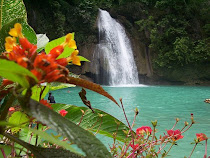
A beautiful, clear stream of water cascading 70 meters into a rock pool surrounded by ground orchids, wild ferns, trees and boulders. Its cold water provides a refreshing summer splash to all vacationers.
8. Tuasan Falls
The approach to the wild and mighty falls entails a very scenic hike passing through the quaint Barrio of Mainit, Catarman and along the Rocky River bed. The pool below the deafening waterfalls is deep and clear. The surrounding scenery is virgin and perfect for a peaceful picnic. The only sound you hear is that of the tumbling falls and running water. It is 6 kilometers northwest of Catarman proper.
9. Binangawan Falls
In Sagay is Binangawan Falls wherefrom several miniature and gigantic waterfalls gushing through majestic granite stones that converge in one main pool, covered with luscious unspoiled vegetation, and a mystical rainbow are arched by the fall's mist as the sunlight break in through it.
10. Ardent Hot Spring
In the heart of the island bubbles this mineral pool with water around 400C. Vapor rises from the heated waters that run down the vents of the dormant Hibok-Hibok volcano. The springs are ideal to bathe in at night surrounded by cool mountain air. It has therapeutic effects. Picnic huts and tables are available in the beautifully landscaped gardens and there is a restaurant on site. It is 6 kilometers southwest of Mambajao.
11. Macao Cold Spring
It is a spring of natural cold and blue-green waters that overflow with grandeur, perfect to appease and quench one's humid feeling. It is situated at Tupsan Pequiño, Mahinog.
12. Sto. Niño Cold Spring
A spring located 4 kilometers north uphill of Catarman proper. It has a terrific huge pool of cold spring water measuring 25m x 40m sprouting from sandy bottom. The area has native stores, picnic huts and toilets for visitors and guests. It is located 4 kilometers north of central Catarman.
13. Tangub Hot Spring
It is a volcanic hot spring not fully developed a little beneath sea level where a pool is formed by sea stones and corals. Water temperature shifts from cold to lukewarm to warm then to hot as tide changes. Submerge in the warm water inside the pool at low tide and enjoy the cold sea water merging with the hot spring. This rare spring is situated at Naasag, Mambajao - about 12 kilometers west of the capital town; 10-20 meters offshore is ideal for scuba diving.
14. Mt. Hibok-Hibok
Its approach is via the base of Barangay Tagdo in Mambajao. It is a volcano 1250 meters high above sea level. Its slopes are challenges/barriers for professional climbers as they trek skillfully and maneuvers on loose rocks and boulders towards the peak. At the zenith, there is a crater like lake and steam outlets where one can have a clear panoramic view of the entire island and the Bohol Province during sunny clear days.
15. Old Volcano
A volcano located 13 kilometers away from Mambajao with stiff drop off measuring 7,080 meters high above sea level. It is the landmark for PANAAD.
16. Mt. Ilihan
It is located at Butay, Guinsiliban and a 3-hour climb uphill. There, one can see bluish green ridge of mountains and majestic slopes as he recites his Stations of the Cross, especially on Lenten Season. One can experience a sense of relief when reaching the top with its cool mountain breeze. Its splendid beauty is very touching. At the pinnacle, climbers can peacefully camp and take pleasure in unbothered world.
17. White Island
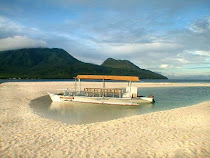
An isolated white sandbar where the view of towering Mt. Hibok-Hibok and Old Volcan reflects the sumptuousness the Province of Camiguin has ever achieved. It is reached within 10 minutes through light water transport from anywhere in Yumbing, Mambajao area.
18. Mantigue Island
The island is 4 hectares of evergreen forest, fringed with white granule sand beaches. A fishing village is found in the north of the island. One side of the island is a white sand beach with coral offshore, and the other opposite side provides a deep drop-off for snorkeling and diving. One gets there by light water craft in 25-30 minutes from San Roque, Mahinog.
19. Jicdup Shoal (Dive Spot)
It lies approximately 2 nautical miles from the shore of Balbagon, Mambajao. The seabed rises forming a shoal about 10 hectares in size hosting a variety of aquatic life. It is one of the best dive spots in Camiguin Island teeming with fishes of different species and shapes/sizes. It has excellent visibility and is best for underwater photographs, and novice divers.
20. Burias Shoal (Dive Spot)
Slightly smaller than Jicdup, Burias is among the favorite spot for high adventure seeking divers. It hauls the thrill seeking divers to the shoal to see schools of jacks, tuna, mackerels and barracudas. A verdant black coral covered bottom is also one of its treasures. Diving here can be strong, however, the little effort spent fining against the current is worth the excitement.
21. Taguines Lagoon
It is a lagoon mantled by limpid water, located at Benoni, Mahinog, with large cliff and gently rolling hills. The brackish water is engulfed in there by a century old crater, ideal for boat and fishing.
22. Centennial Tree
A Pili Nut tree which is more than century old situated at Lakas, Mambajao owned by the Corrales Family. One can marvel how the tree survived the tests of the times as he sees and touches its huge trunk.
CAMIGUIN celebrates year-round festivals like Lanzones Festival held every third week of October when sweet Camiguin lazones is proudly displayed. Highlights of the festival include agri-trade fair and street dancing contest that feature traditional dance, drum circles and colorful ethnic costumes; San Juan sa Hibok-Hibok Festival held every 24th of June in honor of St. John the Baptist with fluvial processions, parades and water sports; Panaad - Holy Week observance when tens of thousands of Christians come to the island to walk around the 64 kilometer circumferential highway as a form of sacrifice, either to fulfill a vow or to do penance for the remission of sins. The pilgrims congregate either at the Old Vulcan or Mt. Ilihan to pray; Camiguin Christmas Festival when choral competition, pastorales contest, parol sa barangay and belen sa barangay are conducted during Yuletide Season; and May Festival when notable fiesta celebrations of almost all barangays in Camiguin re-celebrated.


The people of CAMIGUIN are friendly, fun-loving, and very hospitable. It’s capital, Mambajao, has a friendly small community of mostly Visayan and Chinese origin. Camiguingnons are also hardworking. The main occupation of the people is fishing and farming. Coconut is the major production as far as sources of income is concerned. Other plantations are abaca, rice, mangoes, lanzones and other fruit trees. Small cottage industries are increasing in number to accommodate the influx of visitors. Cebuano is the main language while a few speak Kinamiguin, an ancient dialect. Nearly everyone speaks English fairly.
Their source of livelihood comes from the produce of their land and the surrounding ocean. Every October, Lanzones Festival transform the island into an explicit sight of townsfolk dressed up in their traditional costumes to celebrate the harvest of this small, sweet tasting, light-yellow fruit that grows in bunches at the foot of Mt. Hibok-hibok. The festival is remarkably good-natured, filled with colors and properly organized. Camiguin Lanzones Fruit Aside from these natural landforms huddling in the island, Camiguin is an area of forested mountains mixed with coconut trees along its coasts.
CAMIGUIN beckons you to come, savor and discover the many ways anyone can unwind and joyfully dwell on the island's offerings.

"finest beach in the world"
 It is seven km long and one km width at its narrowest point, is situated off the northwest corner of the island of Panay, and lies in the Western Visayas island-group, or Region 6, of the Philippines. In Boracay, there are three villages or barangays, Yapak, Balabag and Manoc-Manoc.Yapak is generally hilly but there are roughly beautiful beaches such as Ilig-Iligan, Pukashell and Balinhai beach.Balabag is the central part of the island and the virtually popular place is White Beach. Half of the residents live in a quiet place Manoc-Manoc.
Boracay is a beautiful small island surrounded by coral reefs and located one km north-west of Panay island in Visayas of the Philippines. It is the most popular beach in the country as the most visited tourist spot in the Philippines. Before the middle of 1980s, it was a famous hidden resort but known to limited numbers of sea lovers. Now many tourists visit there from all over the world, America, Europe, korea, Taiwan and so on. The climate from March to June are the summer months in Boracay, with temperatures ranging from 28 to 38 degrees Celsius. November to February bring enjoyable winds, cooler temperatures, and occasional rain showers. July to October are the rainy months.

High season is from November to the end of May and low season from June to October. Acommodation fee depends on the seasons and facilities of hotels. Boracay is windy in whole seasons and especially in the low season. There is no coral off White Beach, though plenty of dive boats will take you to good dive sites. Windsurfing months are Nov-April, best Dec-Feb. The best months are Jan-May, OK June- Sept [with some rain], but April and May are Philippine school holidays and the place gets noisy and crowded then. Don't consider Oct-Nov because it is windy, possibly grey and wet.
Languages used other than Tagalog/Filipino and other local dialects, English is generally spoken in Boracay. Aklanon is mostly spoken in Aklan Province (island of Panay), wherein Boracay is part.
They report 160,000 tourists visited or stayed in Boracay in 1997 and Koreans are major in numbers. In Visayas there are many marine sport spots with coral reefs and white beach. Among them four km long white beach of Boracay is beyond contrast. There are a lot of restaurants and hotels along the white beach though they are hidden behind coconut trees planted.
A peaceful atmosphere - though' fairly busy - and friendly locals. The sand is remarkably white, soft, in no way gets hot and extends for 3 miles. There is a massive diversity of small hotels, restaurants and bars offering international cuisine just off the beach, comparatively cheap and relaxed. Although rated as one of the top ten beaches in the world, current tourism expansion has lead to some environmental concerns.
The code in Boracay is precisely casual. Walking barefoot than shoes is the law rather than the exclusion. Wavering discos have the beach for a floor, giving dance a new twist. From sundown to sunrise, the island turns into one big party place where everyone is welcome to join in.
Boracay is the ideal site for golf, tennis, bowling, even beach volleyball. Top-of-class facilities for these activities are available in the island. For golf bugs, Fairways and Bluewater Resort Golf and Countryclub has an 18-hole championship course.

Itching now to go to Boracay White Beach? Pack your bags and take off to the Philippines’ greatest tourist destination. The country’s major airlines like the Philippine Airlines fly regularly to Kalibo where the world’s well-known Ati-atihan fiesta is in custody yearly, Aklan. From there, you can take an air-conditioned bus to Caticlan, the jump-off point from where you will get a boat to Boracay. Asian Spirit and SeaAir, however, have direct flights from Manila to Caticlan airport three times a week. If you’re coming from Cebu, you can also take a direct flight to Caticlan. For those traveling by sea, there are shipping lines that ply the Manila-Caticlan route or Manila-Dumaguete which is only half hour east of Kalibo.
If you want to go to Boracay by plane, from Manila’s domestic airport, get flights to Boracay either via Kalibo (1 hour and 45 minutes away) or via Caticlan (10-20 minutes by boat). From Kalibo airport, air-conditioned vans and buses for hire will take you to the Caticlan Jetty Port, where boats are stationed to carry you to the island. Motorized tricyles bring will take you from Caticlan airport to the jetty port, 3 minutes away.
Carriers from Manila to Caticlan:
• Asian Spirit
• Corporate Air
• Interisland Airlines
• South East Asian Airlines (SEAir)
Carriers from Manila to Kalibo:
• Cebu Pacific
• Philippine Airlines
• Air Philippines
• Asian Spirit
Boracay Map

From Iloilo, there are air-conditioned vans and buses going to Kalibo or directly to Caticlan, where boats going to Boracay are stationed.
From Cebu, Asian Spirit and Sea Air fly to Kalibo two times weekly.
If you want a stress-free transfer from the airports to landing stage port to Boracay, book your accommodations prior to coming to Boracay. You may be approached by some people at the Kalibo and Caticlan airports trying to sell rooms to travelers without bookings. The best recommendation is to look elsewhere. If you have a prior booking, do not be influenced by people offering "cheaper" or "better" housing.
If you want to take a boat going to Boracay, Several ferries sail between Manila and Caticlan. The journey takes between 12 and 16 hours.
Ferries from Manila to Caticlan:
• Negros Navigation
• Super Ferry
• MBRS Lines
By Road
Buses and cars run from Manila to the Southern provinces by means of the Strong Republic Nautical Highway. A nautical system conceptualized under the term of President Gloria Macapagal Arroyo. Buses leave from the Philtranco terminal in Cubao and Pasay city throughout the day. The journey by bus takes approx. 12 hours. Caticlan is the 4th port that the highway runs through.
So what are you waiting for? No matter what your heart’s craving is, Boracay Island can satisfy it beyond your wildest imaginations. Upon arriving there, all you have to do is prepare yourself for the next greatest days of your life.

Monday, October 27, 2008

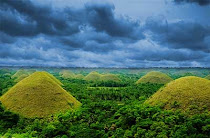
Chocolate Hills, Bohol, Philippines

Tarsier of Bohol, Philippines

white sands + clear skies = Perpetual Bliss
Man-made Forest

Man-made Forest
This path used to experience floods during rainy days that obstruct vehicles from taking it. As the main solution for this problem, a reforestation project was carried out in this vicinity during the 70’s. The trees planted, stand with graceful sturdiness as they help in ceasing occurrences of floods. One notable characteristic of this forested area is that when one enters it one can immediately feel a sudden drop of temperature. A lot of tourists, especially those who have gone to Baguio, name it as the Little Baguio of Bohol because of its cool atmosphere. Tourists can take advantage of taking pictures with the gigantic trees scattered all over the area.
Hinagdanan Cave
Located 2 kilometres from the town proper of Dauis, the Hinagdanan Cave is almost an all natural attraction since certain areas have been modified in order to ease up its accessibility, but none the less the cave is still a must-see site. The cave was discovered by a farmer who was cutting up the weeds to give way for his planting when he accidentally discovered a large hole. Thinking that it might lead to something else, the farmer dropped a stone to find out if there is a surface below. But to his surprise, he heard the sound of water. That immediately made him conclude that this was not an ordinary hole but it was a hole leading to a cave.

Hinagdanan Cave
Since the hole was too small for him to pass through, he tried to find another hole that can serve as a passageway to the cave and found it indeed. The cave is an underground type, which required a ladder to aid in accessing it. Later on, a cemented staircase was permanently made, which is known as hagdanan in the native tongue. Soon the added structure became associated with the cave eventually causing the cave to be known as the Hinagdanan Cave(A Cave with a Staircase).
For cave exploration enthusiasts, one can study the alluring stalactites and stalagmites inside the cave. One can also take a dip in the pool found in the middle of the cave that is more than 10 feet deep. A professional lifeguard is available for the safety of the swimmers. There are only two fluorescent lamps that provide light for the visitors for better viewing inside the cave. However, one can bring a flashlight or a battery-operated torch for additional lighting while exploring the cave.
Legend has it that the townspeople long time ago could borrow house utensils from the supposed elves that reside in the cave. However, the benevolent relationship between the people and the supernatural beings ended when the borrowers neglected to return what they borrowed from the magical beings.
What is unique about the cave is that the water of the pool is a mixture of salty and groundwater creating an effect of a smell of piss. But the cool temperature of the pool offers a stress-releasing benefit for anyone who wants to take a dip in its waters.
Entrance Fee: Adult: Php 15.00 / Children/Students: Php 10.00
Parking Fee (Any type of vehicle): Php 15.00
Location: Dauis—6km from Tagbilaran City
Badiang Spring
Badiang Spring is an extraordinary water system that is located in Valencia. This is an underground spring that provides freshwater that gushes out from twin pipes that are located near Bohol Sea. The freshwater that is released from the twin pipes is diverted to fill two swimming pools of opposite sizes. The larger one basically is for adult swimmers and the smaller one is intended for children only. Although this natural attraction has not yet gained fame similar to that of the Loboc River, this spring is beginning to draw attention from an increasing number of travellers.

Well-sheltered picnic tables have already been installed near this scenic spot to invite picnickers to experience the beauty of the spring.
Location: Valencia—44 km from Tagbilaran City
Loboc River
This winding river has gained rising fame from hosting cruising activities for both local and foreign visitors. This river is located in the so-called singing town of Bohol, the municipality of Loboc.

This river, as far as the modern world is concern, has long been an important part in the lives of the Lobocanons for this is primarily the source of electricity that is distributed to several towns in Bohol including the town of Loboc. Aside from being a source of electricity, Loboc River has also long aided the people in daily activities like washing, bathing and other recreational activities. More importantly, this river has provided jobs to a lot of people as it has opened income-generating livelihoods by entertaining the needs of tourists around the area. The most famous of which is the floating restaurant cruise wherein tourists are able to experience first class dining while on board for almost an hour, that could start either from the Loay Bridge that is found in the neighbouring town or at the town proper.
Location: Loboc—24 km from Tagbilaran City
Blood Compact Shrine
If Cebuanos take pride of Lapu-lapu who became the first Filipino who fought and killed Ferdinand Magellan who led the first group of Spanish explorers haplessly to the Philippines, the Boholanos also have their very own Datu Sikatuna. He, a native of Bool—a barangay of Tagbilaran City—became the first Filipino ambassador of peace and goodwill.

One Blood!
He carried out this role when he performed a blood compact with Don Miguel Lopez de Legazpi, who traced the footsteps of the Portuguese Ferdinand Magellan and successfully led the next batch of Spaniards to set foot in the archipelago. Held on March 16, 1565, this unprecedented feat in Philippine history is considered to be as the first “Treaty of Friendship” between a European and an Asian.

Sandugo Shrine, Bohol, Philippines
Essentially, the blood compact was forged between these two chieftains for the purpose of creating cordial and diplomatic relations between the two very different kingdoms – it was a political event. In commemoration of this historical event, a life-size diorama made up of pure bronze is erected just few meters from the exact location where the ritual was made. The statues depict what happened during that commemorative event, and in a way by serve as an evidence of Bohol’s rich history.
Entrance Fee: None
Parking Fee (Any type of vehicle): None
Location: Barangay Bool, Tagbilaran City (city capital)
Linaw Beach Resort & Restaurant
Alona Beach, Panglao, Bohol
Boholanos take pride not only of their scenic landscapes, but also of their pristine white-sand beaches that are at par with some of the world’s famous beaches. In fact, in the island of Panglao, several private and public beach resorts provide tourists with one of a kind beach experiences born from the beauty of the place along with their hospitable services. The world renowned Alona Beach resort is an example of these worth-seeing beach resorts.
This 800 meter stretch of white sand beach has attracted a lot of visitors, both locals and foreigners alike are attracted to the one of kind activities offered by beach and diving resorts. Most of these foreign tourists have already settled for good in this area because of the peace and security that they experience as well its accessibility. Most scuba diving services can be arranged in any of the resorts found in this area making it as a point for embarking on dive tours to two of the most famous dive spots around the world—-Balicasag and Pamilacan islands.
It can be safely said that because of the satisfaction and convenience provided by beach resorts like Alona Beach cause a lot of foreign visitors to come back for more and experience again the beauty of the place and the people of Bohol particularly in Panglao.

Dauis Church
An important site for the spiritual uplifting of the townspeople, this church is located at the heart of the municipality of Dauis in the island of Panglao. Although the church was built during the Spanish regime, it possesses semi-modern features especially on its façade. The church is flanked with a rotunda, barangay hall and a mini-park—one common characteristic of a Spanish town layout.

Dauis Church

Dauis Church Altar
The well was not intentionally constructed at the foot of the altar, but its formation was brought about by a miraculous involvement of their patron saint, the Virgin of the Assumptions. Legend has it that when a group of pirates invaded the town, the townspeople quickly heed for protection and security in the premises of the church for several days. Since they locked themselves inside the church, they naturally ran out of provisions and water. This made their stay difficult since water is an important basic need of human beings in order to survive. Suddenly, out of nowhere a well appeared at the foot of the church altar. The water from the well to their surprise was fresh and palatable despite the fact that the church was constructed just near the sea. Many attributed this divine intervention to the Blessed Virgin Mary without doubt, but instead with strong conviction.
Entrance Fee: None
Parking Fee (Any type of vehicle): None
Location: Dauis — 3 km from Tagbilaran City (city capital)
Schedules of Regular Masses: Saturday—6pm / Sunday—6am and 8 am
Being the oldest church in Bohol, the Baclayon Church serves as a cornerstone of the Boholanos’ embrace of the Catholic faith introduced by various religious orders all throughout the country. Baclayon church is the first stone church to be built around the area of Baclayon. It was constructed by both the hopeful Jesuits and the local town folks of Baclayon that were eager to embrace fully and strengthen their Catholic faith.

Our Lady of Light Chruch, Loon, Bohol, The Philippines
Later on, the rest of the Boholanos in various towns of the province caught up with the religious spirit displayed by the people from Baclayon by putting up their own respective stone-churches; thus, cementing their lives to the Catholic faith. Beside the idea, it is also interesting to note that the townspeople of Loboc and Loon built their own churches with different features making it unique to the other churches in the province.

St. Peter Parish Loboc Church
The Loboc Church which is located just few steps from the very famous Loboc river stands with pride with its massive edifice. The museum that is adjacent to it houses ancient church relics and artefacts and it is open for viewing all throughout the week. Right next to the museum is a convent where the internationally acclaimed and multi-awarded Loboc Children’s Choir is regularly trained not only for competitions but also for cultural performances and Eucharistic celebrations. If you happen to visit the church while the choir is having their practice, you would be lucky to have the opportunity to listen to the golden voices of these classically trained young singers. Nevertheless, if you visit as a group, given the permission, you may request the choir leader or the parish priest to get a glimpse of these melodic cherubs who will perform for you with just few tunes.
The Church of Loon, also known as the Church of the Virgin of the Light, projects magnificence with its Baroque-influenced architectural features reflected on the façade. On top of the main entrance of the church is a carved image of the Virgin of the Light who happens to be the patron saint of the Loonanons. As a tribute to the founding of the church with the Blessed Virgin Mary as their patron saint, the Loonanons hold a feast day annually every 8th of September. This festive celebration stands out from the rest of the feast days in different towns in Bohol as this is the only one scheduled on a different month unlike the rest that are in the month of May. Also, an interesting feature of this festivity is that during this occasion, everybody invites anyone to feast with them all throughout the day through “open house” invitations. One interesting feature of this church is that it is connected to Barangay Napo which used to be the former seat of the municipality of Loon through what is believed to be the longest stairway in the country. It has a total of 154 steps made up of coral stones. Fronting the church just few meters away are the tennis and basketball courts which are free for use by anybody even by visitors from other places.
Entrance Fee: None
Parking Fee (Any type of vehicle): None
Location: Loboc Church: Loboc—21 km from Tagbilaran City
Loon Church: Loon—25 km from Tagbilaran City
Bohol Map



 Posts
Posts

